Looking Back:Reflecting on my soundtrack Compotion Criteria D by Nicholas
How well does your soundtrack communicate the mood, emotion, and action of the chosen scene?
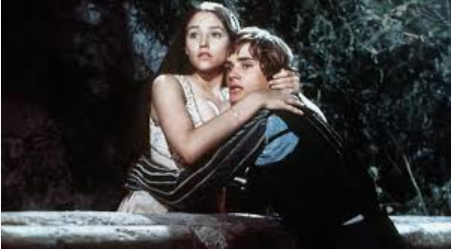
According to the feedback that I received from my peers, 12 out of all 16 people responded, “very effective.” I received consistent positive feedback about how my use of rather quiet flute and strings delivered mysterious yet hopeful emotions matching the scene where Romeo needed to stay hidden but had a strong desire to meet Juliet. Overall, I communicated the mood and emotion of the chosen scene very clearly.
Which musical elements were most successful in expressing meaning? Why?
The most successful in expressing the meaning is the use of the flute for melody according to my peers and also my own intentions when creating the music. As a scene that needs to be poetic but risky, using the flute is a suitable choice because it can play quiet and quick high-pitched notes clearly over harmonies, making the emotions I’m trying to express very clearly.
How did your research into the scene, characters, or style influence your musical decisions?
I researched the scene and the character and then made my conclusion on what style the music will be. The scene carries mainly suspicion, hysteria with bits of hopeful, romantic feelings. Also, Romeo and Juliet are both characters that takes emotions and romance seriously with strong desires, so I decided to use strings and woodwinds which best suits the atmosphere: Modern electronic music will be extremely unsuitable for an ancient play, percussions like drums would be too loud and ruin the romantic emotions, brass instruments would be too loud and bright.
The use of harmony is also impacted by research into the scene. Since the scene when Romeo and Juliet got to talk in the balcony carries emotions like joy but included bits of risk (Of Romeo getting killed), I avoided completely major chords as that would destroy the risk factor, and avoided completely minor chords so the joy in the scene won’t be gone. In the end I mixed majors and minors.
¾ time signature is chosen to resemble a waltz dance because in the story, fancy dance parties are parts of the main plot.
What were the strengths of your composition?
According to the peer feedback I received, my biggest strength in my composition is using a suitable instrument to effectively connect to the scenes. Lots of feedback said using the flute for the melody made emotions very clear without being overly aggressive. I also agree on this because I did find using the flute making my melody stand out surprisingly effectively.
What challenges did you face during the creative process (e.g. structure, instrumentation, technology)?
Challenges I faced during the creative process are mainly related to technology. I am not very familiar with how to use the app GarageBand so using it got me confused on where to put notes, how to move the tracks and how different instruments can be added from the mix of a giant sample library.
I also faced a problem when choosing instruments. Before completing the music, my flute melody was accompanied by an oboe and clarinet playing the exact same notes in different octaves. Removing the other woodwinds made my music appear to be bland, but not removing seemed a bit too extra and messy.
How did you solve or respond to these challenges?
For the technology problem, I quitted using GarageBand and switched to use Musescore instead, an app that I am very familiar with. I did not encounter any tech problems when I used Musescore, making the creative process very smooth and fast.
For the choice of instrument problems, I ended up deleting the other woodwinds. A scene like Act 2 Scene 1 should sound clear and elegant which a single flute will be more suitable in. Multiple woodwinds can be used when there are multiple characters or some more relaxed and loud scenes, but just not on one that needed to focus on one character.
What feedback did you receive from your peers or your teacher?
Before sharing the music with the whole class, I did not share the music with any of my peers, so there was no peer feedback.
From my teacher, I received feedback on the choice of pitch/role of instruments and techniques. My teacher suggested me to use the special features of each instrument to its limits. For example, making the viola section play lower octave so my music can be more layered, and these can do what normal violin sections can’t reach. I also received feedback from my teacher on how to make the music less boring: Use the Pizzicato on violin sections to create a sense of variation for the listeners.
How did you use this feedback to improve your soundtrack?
I followed my teacher's feedback and changed the pitch for the viola sections after testing a few times with different instruments for the instrumentation role feedback. For the Pizzicato technique tip, I also changed the structure of my music for variations. Before the feedback I decided to make the music in A-B-A. After the feedback, I added a small part between part A and B which is the repetition of the main melody except the violins sections plays Pizzicato, making the music more engaging.
If you had more time, what specific changes would you make and why?
I would adjust the dynamics of the music. In the process I mostly paid attention to the roles and instrumentation, and I only used vague music terms like P and F throughout the whole song. As a dramatic scene, dynamics should have variation (Parts like Romeo sneaking to Juliet’s balcony and talking to Juliet can carry very different emotions.) When the music is shared with the class, I also noticed one of my chords that I used the F dynamic was overly strong, that even covered up the main melody, something I do not want. I will write a crescendo before the P and F next time for a better transition (and decrescendo) when the loud chord ends.